Quick answer
Braces colours come from small elastic rings called ligatures that hold the wire on each bracket. Most orthodontists stock 20 to 30 shades and change them at every adjustment, usually every 4 to 8 weeks. Navy, dark purple, black and dark blue make teeth look whitest. White, clear and yellow make them look more yellow.
What gives braces their colour
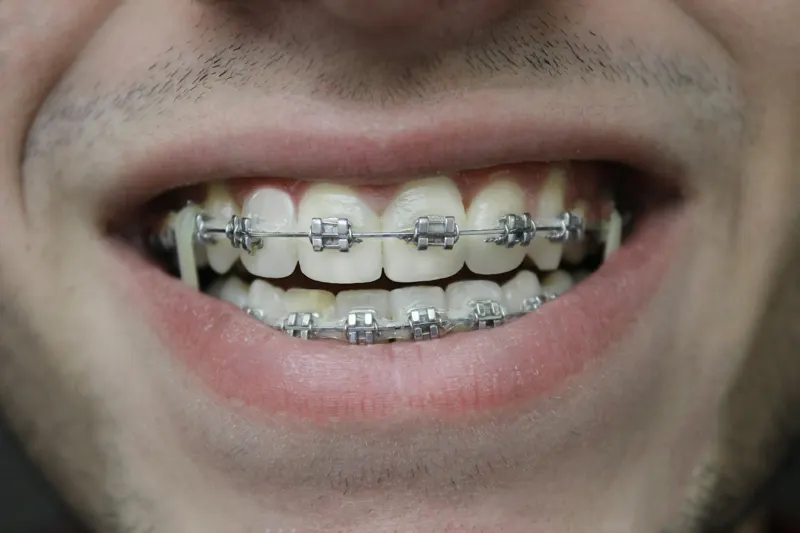
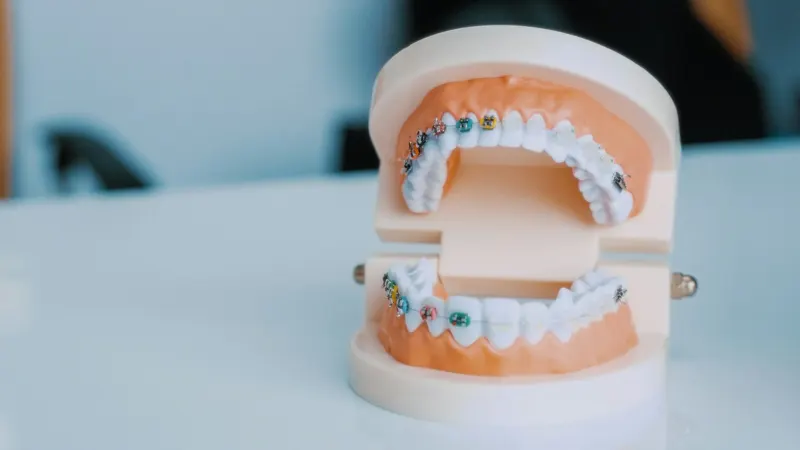
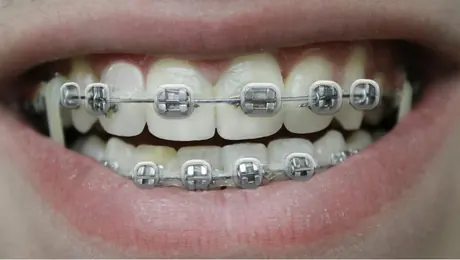
Traditional braces have three visible parts. The brackets are the small metal squares glued to each tooth. The archwire runs through every bracket and does the work of moving the teeth. The ligatures are tiny elastic rings, also called O-rings or ties, that wrap around each bracket's four corners and hold the wire in its slot.
Only the ligatures change colour. The brackets and wire stay silver, or tooth-coloured if you have ceramic braces. That is why every colour choice on this site is really a choice of ligature.
A power chain is a row of ligatures joined together. Orthodontists use it to pull teeth closer and close gaps, and it comes in the same colours as single bands. If you see a continuous coloured line across your brackets, that is a power chain. See power chain colours and the three kinds of bands.
Every braces colour, with scores
These are the 27 shades most orthodontists offer. Three scores sit next to each one. The Tooth Brightness Index shows how much whiter the colour makes the tooth beside it look, from 0 to 100. Stain risk shows how easily the band shows food and drink stains. Stands out shows how strongly the colour contrasts with a natural tooth shade.
| Colour | Tooth Brightness | Stain risk | Stands out | Best for |
|---|---|---|---|---|
| Navy Blue | 80 | Low | A lot | Whiter-looking teeth, school photos, every skin tone |
| Dark Purple | 79 | Low | A lot | Whitening with personality |
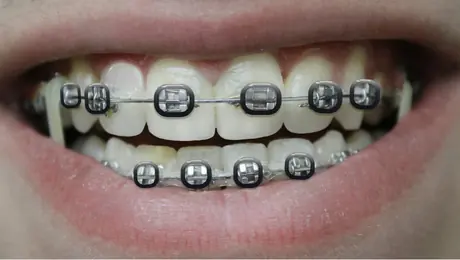
| Black | 74 | Low | A lot | A bold, graphic look |
| Dark Blue | 74 | Low | A lot | Whitening without going dark |
| Purple | 65 | Low | A lot | Fun colour with a whitening bonus |
| Royal Blue | 64 | Low | A lot | Bright colour that still flatters teeth |
| Burgundy | 58 | Low | Clearly | Subtle colour for adults |
| Blue | 52 | Low | A lot | First-time picks |
| Dark Green | 42 | Low | Clearly | Team colours, autumn |
| Gray | 38 | Low | A little | Low-key looks, adults |
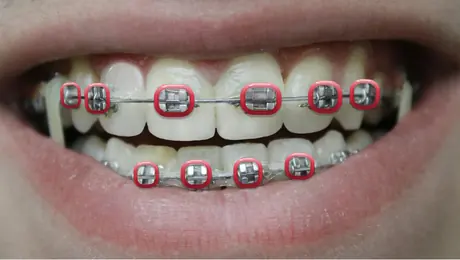
| Hot Pink | 38 | Low | A lot | Statement looks |
| Lavender | 38 | Low | Clearly | Pastel looks |
| Teal | 36 | Low | Clearly | Bold colour that is not too common |
| Light Blue | 28 | Medium | Clearly | A soft pastel look |
| Red | 26 | Low | A lot | Holidays and team colours |
| Pink | 25 | Low | Clearly | Playful, friendly looks |
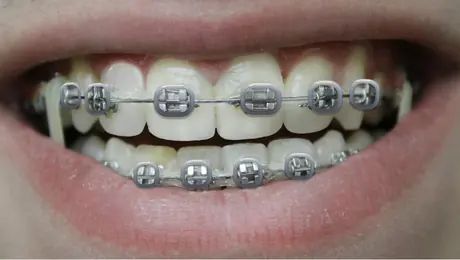
| Silver | 22 | Medium | A little | Low-key looks with metal brackets |
| Turquoise | 20 | Low | Clearly | Summer looks |
| Green | 14 | Low | Clearly | Team and holiday colours |
| Orange | 8 | Low | Clearly | Halloween, team colours |
| Light Pink | 8 | High | A little | A barely-there tint |
| Gold | 5 | Low | A little | School and team colours |
| Mint | 4 | Medium | A little | Spring pastels |
| Clear | 1 | High | A little | Ceramic braces for short periods |
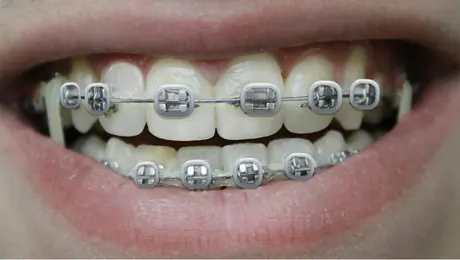
| White | 0 | High | A little | Rarely the best choice |
| Lime | 0 | Low | Clearly | Neon party looks |
| Yellow | 0 | Low | Clearly | Short themed looks only |
The scores are calculated from each colour's measured lightness and hue against four real tooth shades. See exactly how.
How each colour family looks
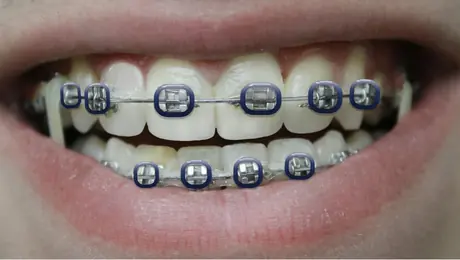
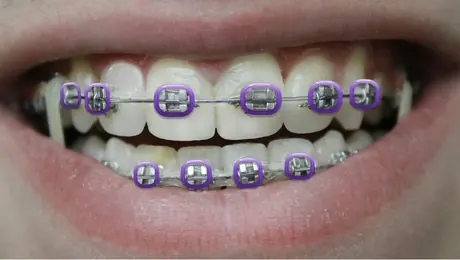
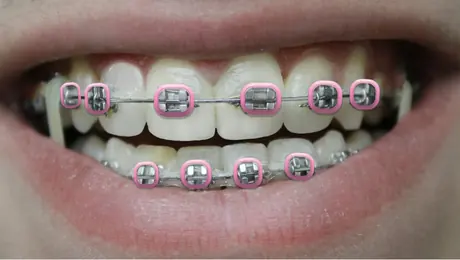
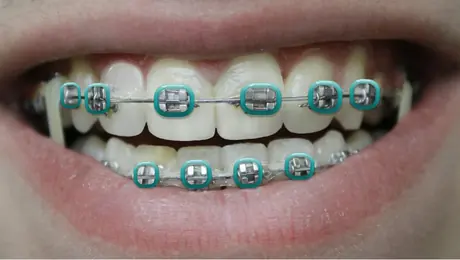
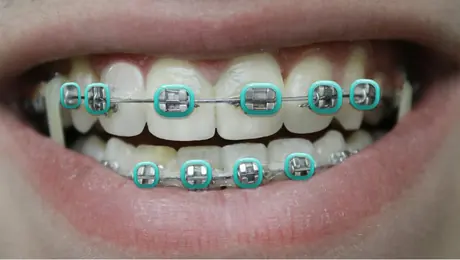
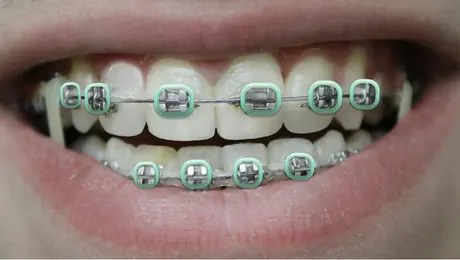
Every picture below is the same real smile with the same natural tooth shade, so the only thing that changes is the band colour.
Blues
The most requested family. Dark blues give the strongest whitening effect on the list, while light blue is softer and more pastel.


Purples and pinks
Dark purple is the second-best colour for whiter-looking teeth. Pinks are playful and popular, though the lightest pinks stain more.


Greens and teals
Teal and turquoise read as fresh and bold. Bright green can look like food from a distance, so many people choose darker greens.

Reds and warm shades
Burgundy is the one warm colour that still helps teeth look whiter. Red, orange and gold are great for holidays and team colours but warm up the look of your teeth.



Neutrals
Neutrals keep braces low-key. Black is bold and whitening, silver blends with the metal, and clear is close to invisible until it stains.
How to choose your braces colour
Five questions settle most decisions. Answer them in order and you will usually land on one or two colours.
- Do you want your teeth to look whiter? Pick a dark, cool shade: navy, dark purple, dark blue or black. Skip yellow, gold, white and clear. See the side-by-side test.
- How much do you want people to notice? Silver and gray almost disappear on metal brackets. Navy and burgundy are noticeable but quiet. Hot pink, royal blue and turquoise are made to be seen.
- What goes with your skin tone? Jewel tones such as navy, purple and teal flatter almost everyone. Pastels like lavender and light pink look softest on lighter skin, while gold, turquoise and bright pink pop beautifully against deeper skin. See picks for every skin tone.
- Is there an event coming up? School photos, a wedding or a holiday are good reasons to choose a classic colour or a themed one, since the bands stay on for 4 to 8 weeks.
- What do you eat and drink a lot of? If curry, coffee, tea or cola are daily habits, avoid white, clear and the palest pastels, which show stains fastest. How clear bands stain.

One colour, two colours or a pattern
You are not limited to a single shade. Most orthodontists are happy to do any of these if you ask at the start of the appointment. Browse 24 ready-made combos.
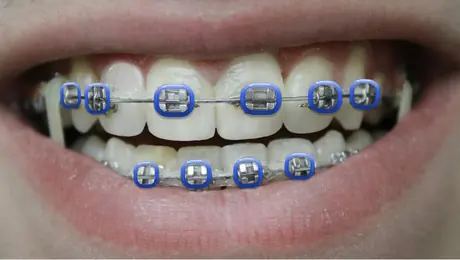
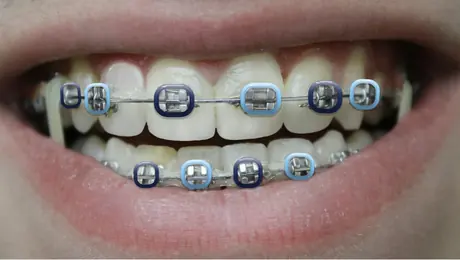
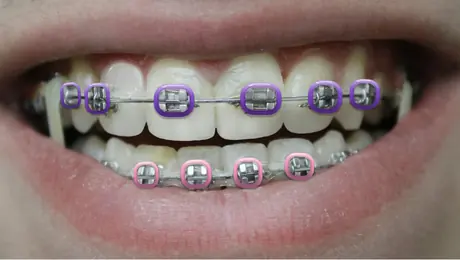
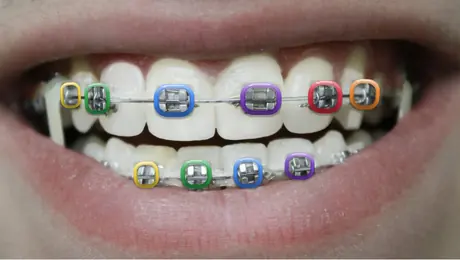
- One colour. Every band the same. Clean and easy to change next time.
- Alternating. Two colours, every other tooth. The most popular way to use two shades.
- Top and bottom. One colour on the upper teeth and another on the lower teeth.
- Custom pattern. Any colour on any tooth, like rainbow, team colours or a gradient.
Braces that do not use coloured bands
Not every type of braces has colour choices. It helps to know which kind you have before you plan a look.
- Self-ligating braces such as Damon braces have a small built-in door that holds the wire, so there are no elastic ligatures to colour. You may still get coloured power chains at some stages.
- Ceramic braces use tooth-coloured brackets. Orthodontists often suggest clear, white or gray bands to keep them subtle, but you can usually choose any colour.
- Lingual braces sit behind the teeth, so bands are not visible.
- Clear aligners have no brackets or bands at all.
Stains, changes and care
Bands are replaced at every adjustment, usually every 4 to 8 weeks, so nothing you choose is permanent. Between visits, light colours can pick up stains from strongly coloured food and drink.
Foods and drinks that stain light bands
- Curry and turmeric
- Coffee and black tea
- Cola and dark sodas
- Tomato sauce and ketchup
- Mustard
- Berries and red wine
Simple ways to keep colours fresh
- Brush around each bracket after meals
- Rinse with water after coffee, tea or curry
- Choose darker shades if you love staining foods
- Ask for new bands if one breaks between visits

Try it on your own smile
Spin the wheel, mix two colours and see the Tooth Brightness score live.
Common questions
How many braces colours are there?
Most orthodontists keep 20 to 30 shades in stock. This guide and the picker cover the 27 colours you are most likely to be offered, from clear and silver to navy, teal, hot pink and gold. Some practices also carry glow-in-the-dark and glitter bands.
What is the most popular braces colour?
Blues and purples are the most requested family, with navy, light blue, purple and pink asked for most often. Navy is also the top scorer on our Tooth Brightness Index at 80 out of 100.
What braces colour should I avoid?
Yellow, gold, lime, white and clear are the ones most people regret. Yellow and gold blend with the natural yellow in enamel, white makes teeth look darker by comparison, and clear bands stain within days.
What colour cancels out yellow teeth?
Blue-violet. It sits opposite yellow on the colour wheel, so navy, dark blue, dark purple and royal blue make teeth look less yellow. In our scores dark purple has the strongest pull away from yellow of any colour.
Can I get different colours on top and bottom?
Yes. Ask at your appointment and most orthodontists will put one colour on the upper brackets and another on the lower ones, or alternate two colours tooth by tooth.
Do braces colours stain?
Light colours do. White, clear, light pink, mint and silver pick up colour from curry, turmeric, coffee, tea, cola and tomato sauce. Dark colours hide stains. Because bands are replaced at every visit, a stain only lasts until the next adjustment.
How often do braces colours get changed?
At every adjustment appointment, which for most people is every 4 to 8 weeks. Your orthodontist removes the old bands and puts on new ones, so you can choose again each time.